
Fort Walton Beach Parasailing Accident Lawyer
Home » Recreational Accidents » Parasailing
Practice Areas
Experienced Personal Injury Attorneys for Parasailing Accidents in the Florida Panhandle
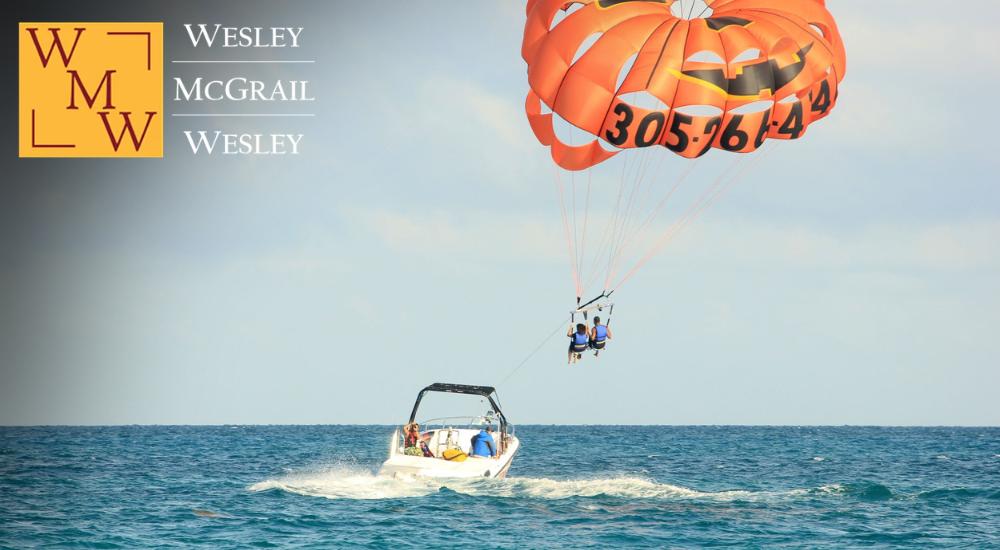
Parasailing is one of the most popular attractions along the Emerald Coast. Every year, tourists and residents alike book parasailing excursions out of Fort Walton Beach, Destin, Pensacola, Panama City, and the surrounding Florida Panhandle to enjoy sweeping views of the Gulf of Mexico from hundreds of feet in the air. Most trips end exactly as they should, with excited customers back on the boat, cameras full of photos, and no incident to speak of. But when a parasail operator cuts corners on safety, ignores weather warnings, or sends customers up on faulty equipment, an exciting outing can turn into a dangerous recreational activity in a matter of seconds.
When a parasailing accident happens, the physical, financial, and emotional toll on victims and their families can be severe. At Wesley, McGrail & Wesley PLLC, our attorneys represent injured tourists, residents, and grieving families who have been affected by parasailing accidents throughout Fort Walton Beach and the broader Florida Panhandle. We understand the specific state and federal laws that govern commercial parasailing operations, and we know how to investigate these cases to determine what went wrong and who should be held accountable.
If you or a loved one has been hurt in a parasailing incident, our law firm is ready to help you understand your legal options. Call (850) 244-0999 or reach out online to set up a free consultation with an experienced Florida parasailing accident lawyer today.
What Can Cause a Parasailing Accident in Florida?
Not every parasailing accident is preventable. Sudden weather shifts, mechanical malfunctions despite reasonable maintenance, or freak occurrences can sometimes play a role. However, many parasailing accident cases involve circumstances that could and should have been avoided had the operator followed proper safety protocols, maintained its equipment, or complied with Florida law.
Determining which category a given incident falls into is often the central question in a parasailing injury lawsuit, and it typically requires a thorough investigation into the operator’s conduct, equipment history, and decision-making on the day the accident occurred.
Common Causes of Fort Walton Beach Parasailing Accidents
Parasailing accidents in Fort Walton Beach can stem from a wide variety of circumstances, including:
- Improper weather monitoring before or during a parasailing excursion
- High winds or sudden wind gusts that exceed safe operating thresholds
- Defective or worn towlines that snap under tension
- Failures involving harnesses, winches, parachutes, or other parasailing equipment
- Operator mistakes, including poor judgment or lack of proper training
- Boat problems, including engine failure or navigational errors
- Improper attachment of passengers to the parasail rigging
- Collisions with other boats, docks, piers, buildings, or even a passing cruise ship
- Unsafe launch or landing procedures
Equipment and Towline Failures
Parasailing equipment takes a great deal of stress with every trip. Towlines, harnesses, attachment points, winches, and parachutes are all subject to wear over time, and any one of these components failing at the wrong moment can send a passenger into the water, into an obstacle, or crashing back onto the boat.
Regular equipment inspections and thorough maintenance records are essential to catching problems before they cause an accident. When an operator skips inspections, ignores warning signs of wear, or continues using known faulty equipment, that decision can amount to operator negligence and reckless conduct that directly leads to serious accidents.
Operator Error and Unsafe Boat Operation
The person driving the boat plays a critical role in every parasailing excursion. Sudden or unnecessary maneuvers, poor judgment about how close to sail to other vessels or structures, failure to monitor the parasailer in the air, and operating at improper speeds can all contribute to an accident. Collisions with other boats, docks, buildings, trees, or fixed structures near the shoreline are often traceable back to operator error rather than an unavoidable accident.
Dangerous Weather and Parasailing Accidents
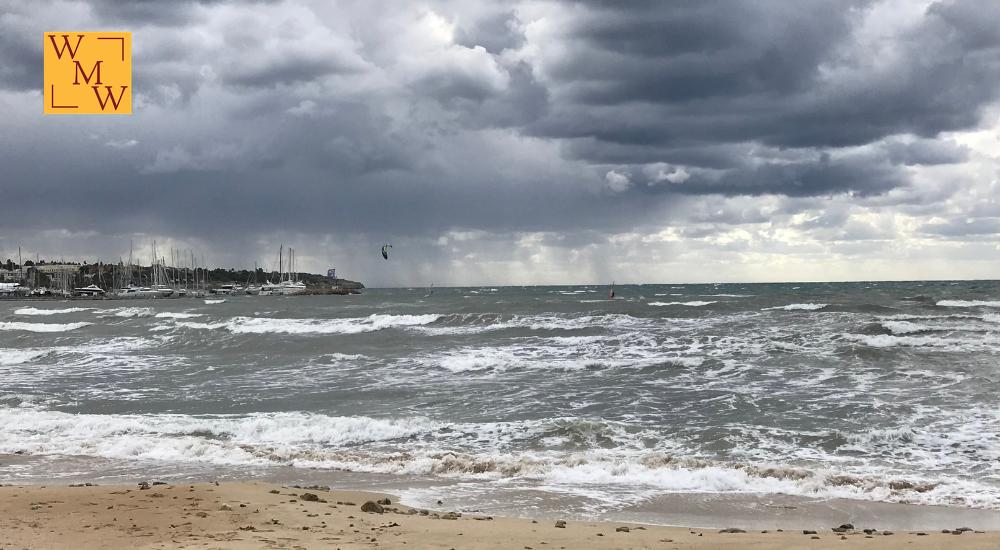
Weather is one of the leading contributors to parasailing accidents along the Gulf Coast. Wind, lightning, rain, fog, and rapidly changing Gulf conditions can all make parasailing unsafe, even when conditions appeared calm when the excursion first began. Florida law specifically prohibits commercial parasailing operations under certain wind, visibility, and lightning conditions.
As such, parasail operators are required to check both prevailing and forecasted weather conditions before taking customers out, and they are required to maintain a weather log documenting those checks. When an operator ignores unsafe weather or fails to properly track weather warnings, they may be operating in direct violation of Florida law.
Florida Laws Governing Fort Walton Beach Parasailing Companies
Florida has enacted specific statutes to regulate the commercial parasailing industry. Florida Statutes §§ 327.37 and 327.375 lay out detailed requirements that commercial parasailing operators must follow, covering everything from operating procedures and licensing to insurance and weather restrictions. These laws exist because parasailing, while thrilling, carries inherent risks that must be managed responsibly by the companies profiting from the activity.
Licensing, Observers, and Safety Equipment for Fort Walton Beach, FL Parasailing
Under Florida law, commercial parasail operators must hold an appropriate United States Coast Guard license to operate the vessel involved in the excursion. In addition to the boat operator, Florida law requires that another person be aboard the vessel to observe the parasailer while they are in the air. Parasailers themselves must also be equipped with an approved noninflatable personal flotation device throughout the excursion. These training and staffing requirements are designed to ensure someone is always watching for signs of trouble and that passengers have basic protective equipment if something goes wrong.
Insurance Requirements for Commercial Parasailing Operators
Florida law also requires commercial parasailing operators to carry liability insurance sufficient to compensate injured passengers. Specifically, operators must maintain at least $1 million in bodily injury liability coverage per occurrence, along with $2 million in annual aggregate coverage. Customers have the right to request proof of this insurance before booking an excursion.
When a parasailing accident occurs, this liability insurance often becomes central to how an injured person pursues compensation (though the insurance company involved will frequently attempt to minimize what it pays out).
Weather Restrictions for Parasailing in Fort Walton Beach
Florida’s parasailing statutes set out specific, measurable thresholds for when commercial parasailing must stop. Operators cannot conduct parasailing excursions when:
- There is a sustained wind speed above the statutory limit (20 mph);
- Wind gusts are 15 mph higher than the sustained wind speed;
- Visibility drops below one-half mile due to heavy fog or rain; or
- A known lightning storm is within seven miles of the operating area.
These rules exist because Florida lawmakers recognized that vague standards like “use good judgment” were not sufficient to keep passengers safe from unsafe weather. When excursion companies continue running trips despite conditions that violate these thresholds, that decision can serve as strong evidence of negligence in a parasailing injury case.
What Parasailing Accident Statistics Tell Us About Safety Risks
Comprehensive, parasailing-specific accident data is limited compared to broader categories like boating accidents. Agencies such as the U.S. Coast Guard track general boating accident statistics, and some safety organizations, including groups associated with the Parasail Safety Council, have worked to compile more targeted information about incidents involving parasailing specifically. What the available data consistently shows is that equipment failure, operator error, and weather-related incidents remain recurring themes across serious accidents involving parasailing, which is why regulatory compliance and careful operator conduct matter so much.
More specifically, data compiled by the Parasail Safety Council indicates that across three decades of tracking, roughly 150 million parasail flights produced approximately 1,900 injuries and 80 deaths. In 98% of fatal cases, the parasailor died not from the flight itself, but because they couldn’t free themselves from the harness after an unexpected water landing during high winds.
Does a Liability Waiver Prevent You From Filing a Parasailing Injury Claim?
Many parasailing companies require customers to sign a liability waiver before boarding the boat. It is a common misconception that signing such a waiver automatically eliminates any ability to pursue a claim after an accident. In reality, a waiver does not answer every liability question on its own. Florida courts examine the specific language of the waiver, the circumstances surrounding the injury, and the conduct of the operator before determining what effect, if any, the waiver has on a particular claim.
Waivers generally cannot protect a company from liability for grossly negligent or reckless conduct, and poorly drafted or overly broad waivers may not hold up under Florida law. An experienced parasailing accident attorney can review the waiver you signed alongside the facts of your accident to determine whether it actually limits your rights to pursue compensation from the responsible parties.
Parasailing Accident Lawsuits and Negligence in Florida
Most parasailing injury lawsuits in Florida are built on the legal theory of negligence. In simple terms, negligence requires showing four things:
- The parasailing company or another party owed a duty of care to the injured person;
- That duty was breached;
- The breach caused the accident; and
- The accident resulted in real damages.
For a parasailing company, that duty of care includes complying with Florida’s parasailing safety requirements, maintaining equipment, monitoring weather conditions, and operating the vessel safely. When an operator fails to check weather reports, uses faulty equipment, or otherwise breaches these responsibilities and that failure directly leads to injury, the injured person may have a viable claim.
Who May Be Liable for a Florida Parasailing Accident?
Determining who is legally responsible after a parasailing accident is not always straightforward. Depending on how the incident occurred, liability may extend to the parasailing company itself, the vessel owner, the boat operator, the owner of any failed equipment used, a maintenance contractor responsible for inspecting or servicing that equipment, a property owner near the launch or landing site, or even the manufacturer of defective equipment.
Parasailing Companies and Boat Operators
Parasailing companies and their boat operators are frequently at the center of these claims. Unsafe operation of the vessel, a decision to run a trip that should have been canceled due to unsafe weather, inadequate training of staff, improper maintenance of equipment, or any violation of Florida’s parasailing statutes can all support a negligence claim against the company and its employees.
Equipment Manufacturers and Maintenance Companies
When an accident is traced back to defective equipment (such as a harness that failed, a towline that snapped, a winch that malfunctioned, a faulty attachment system, or a torn parasail), the manufacturer of that equipment or the company responsible for its maintenance may also bear responsibility. These claims often involve product liability principles in addition to standard negligence theories.
Accident Victims May Have Claims Against More Than One Party
Parasailing accidents frequently involve multiple parties whose separate failures combined to cause the injury. Identifying every potentially liable party is an important part of building a parasailing accident case, because doing so can increase the available sources of compensation for medical expenses, lost income, and other losses. Whether a claim ultimately involves one defendant or several will depend entirely on how the accident occurred and what the investigation reveals.

Common Injuries Caused by Parasailing Accidents
Parasailing accidents can result in a wide range of injuries, some of which cause permanent or life-altering harm. Common injuries include:
- Traumatic brain injuries
- Spinal cord injuries, including partial or complete paralysis
- Broken bones and other fractures
- Neck injuries and back injuries
- Drowning and near-drowning injuries
- Internal injuries
- Cuts, lacerations, and burns
- Soft-tissue injuries, including sprains and strains
- Psychological trauma and emotional distress
Any injured person involved in a parasailing accident should seek immediate medical attention, even if injuries do not seem severe at first. Some injuries, particularly those involving the spine, neck, or head, may not present obvious symptoms right away.
Compensation Available After a Parasailing Accident in Florida
Parasailing accident victims may be entitled to compensation for a wide range of losses connected to their injuries. This can include current and future medical bills, ongoing treatment and rehabilitation costs, lost income during recovery, reduced future earning ability for those left with lasting impairments, pain and suffering, permanent impairment or disfigurement, and other losses supported by the specific facts of the case.
Fatal Parasailing Accidents and Florida Wrongful Death Claims
Tragically, some parasailing accidents result in fatalities. When a loved one dies as a result of a parasailing accident, certain surviving family members may be able to pursue wrongful death cases under Florida law. These claims can seek compensation for funeral and burial expenses, lost financial support, and the loss of companionship and guidance, among other damages.
Wrongful death cases involving commercial parasailing operations often require careful investigation to establish how the underlying negligence led to the fatal outcome. Our Fort Walton Beach wrongful death attorneys at Wesley, McGrail & Wesley PLLC understand what it takes to pursue maximum compensation while guiding grieving families through what is often the most difficult time of their lives.

What to Do After a Fort Walton Beach, Florida Parasailing Accident
The steps taken in the hours and days after a parasailing accident can significantly affect an injured person’s ability to pursue compensation later. If you or a loved one has been involved in a parasailing accident, consider taking the following steps when possible:
- Seek immediate medical attention, even for injuries that seem minor.
- Document all visible injuries with photographs as they heal.
- Save any booking records, receipts, and liability waivers connected to the excursion.
- Identify the parasail operator and the name of the company involved.
- Take photographs and videos of the boat, equipment, and accident scene if you are able.
- Collect names and contact information for any witnesses.
- Preserve all communications, texts, or emails exchanged with the parasailing company.
- Avoid giving recorded statements to the operator’s insurance company without first speaking to a qualified parasailing accident lawyer.
Acting quickly helps preserve evidence that might otherwise be lost, altered, or discarded, particularly when it comes to equipment involved in the accident.
How a Fort Walton Beach Parasailing Accident Lawyer Can Help
An experienced parasailing accident attorney plays a central role in building a strong claim after an accident. This includes investigating the incident from the ground up, identifying every party who may be legally responsible, obtaining the parasail operator’s internal records, reviewing available liability insurance coverage, and pursuing full and fair compensation on behalf of the injured person or their family.
How Wesley, McGrail & Wesley Handle Parasailing Accident Cases
When our Fort Walton Beach personal injury firm takes on a parasailing accident case, we move quickly to investigate the operator and the vessel involved. We work to secure photographs and video footage from the day of the accident, review weather records and reports to determine whether the excursion should have been canceled, examine maintenance and inspection information for the equipment involved, and locate and interview witnesses who may have seen what happened. We also review the parasailing company’s insurance coverage to understand what resources may be available, and we carefully document our client’s injuries and financial losses to support a full and accurate claim.
Because some of these cases may also implicate federal maritime law, depending on the vessel and location involved, our attorneys evaluate every applicable legal avenue when building a client’s case.
How Long Do You Have to File a Parasailing Accident Lawsuit in Florida?
State law imposes strict deadlines on how long an injured person has to file a lawsuit after a parasailing accident. Florida generally provides a two-year limitations period for negligence claims, though the exact deadline can shift depending on the specific facts, the parties named, and whether the claim involves wrongful death or implicates maritime claims under federal law.
Missing the applicable deadline can permanently bar an injured person from recovering compensation, no matter how strong the underlying case may be. Because evidence like weather data, equipment records, and witness memories can fade quickly, injured individuals should not wait to begin investigating their case, even if the filing deadline still seems far away.
Schedule a Free Consultation With a Fort Walton Beach Parasailing Accident Attorney Today
If you or someone you love has been injured in a parasailing accident along the Emerald Coast, the Florida recreational accident attorneys at Wesley, McGrail & Wesley PLLC are ready to help. We can discuss how the accident occurred, evaluate which parties may be legally responsible, review the operator’s liability insurance, and walk you through your options for pursuing compensation.
Contact our office today by calling (850) 244-0999 or reach out online to schedule a free consultation with an experienced parasailing accident lawyer in Fort Walton Beach and take the first step toward protecting your rights.
Schedule Your Free Case Review Today
At Wesley, McGrail & Wesley PLLC, we provide free initial consultations. That means that you can get legal advice at no cost and with no pressure to proceed. We are Fort Walton Beach personal injury lawyers – speak with one of us today by calling 850-244-0999, or contact us online.